Miniature Threaded Button Load Cells: The Engineer’s Guide to High-Precision Force Measurement
In modern industrial automation, robotics, and aerospace testing, machine footprints are shrinking while performance tolerances grow tighter. When test benches, OEM assemblies, or quality assurance rigs require micro-force monitoring in tight quarters, standard S-beam or canister load cells simply cannot fit.
This is where the miniature threaded button load cell excels. Engineered specifically to combine subminiature form factors with mechanical stability, these sensors deliver laboratory-grade compression data without sacrificing structural rigidity.
What Is a Miniature Threaded Button Load Cell?
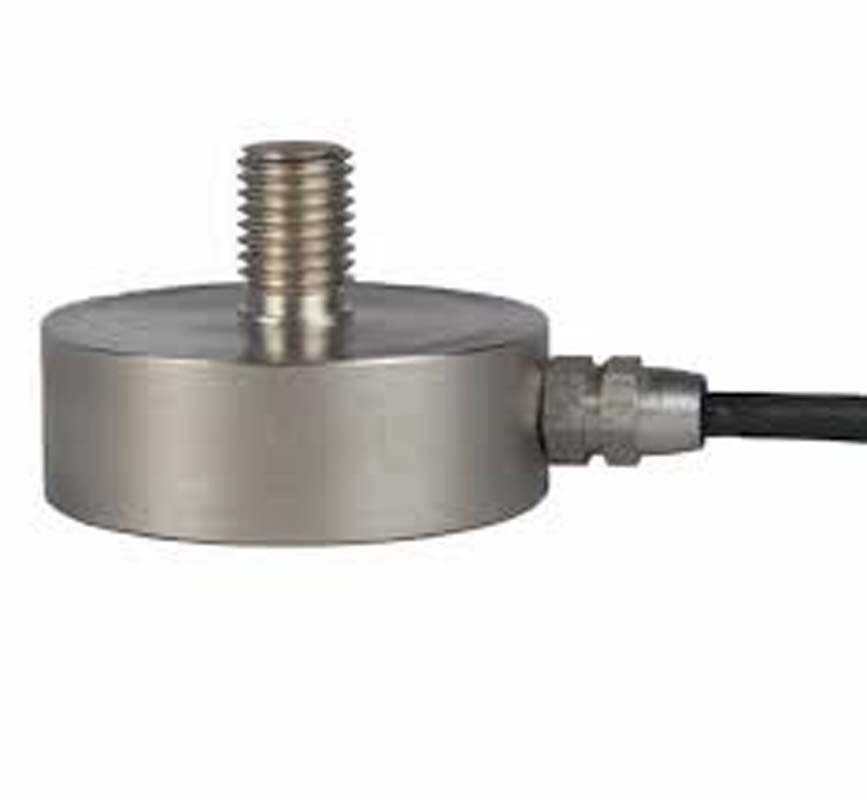
A threaded button load cell (often called a threaded load button or subminiature compression sensor) is a compact strain-gauge sensor designed for compression force measurement.
Unlike standard flat load buttons that rely entirely on surface friction or external clamping fixtures, the threaded variant features an integrated male or female threaded stud (typically M3, M4, M5, or standard imperial threads like #4-40 or 1/4-28).
Key Technical Specs at a Glance:
- Operating Principle: Metal foil strain gauge bridge (Wheatstone bridge configuration)
- Measurement Direction: Direct compression / axial push force
- Common Capacities: 5 N to 50 kN (1 lbf to 10,000+ lbf)
- Profiles: Diameters as small as 10 mm to 25 mm; heights under 10 mm
- Construction: 17-4 PH stainless steel or anodized aircraft-grade aluminum
Why Choose a Threaded Design Over Standard Button Cells?
While flat button load cells are popular for basic point-load compression, threaded load buttons solve several mechanical installation headaches:
1. Zero Sensor Drift and Walk
Standard load buttons can walk, pivot, or slide out of position under continuous cycling or machine vibration. A threaded stud locks the sensor securely into the baseplate, actuator piston, or dynamic load train, ensuring long-term position repeatability.
2. Precise Center-Axis Alignment
Force measurement errors in button cells are almost always caused by off-axis or side loads. Threaded mounting forces coaxial alignment with actuators, pneumatic cylinders, or lead screws, channeling force squarely across the primary measuring axis.
3. Bi-Directional Fixturing Options
While optimized for compression, the threaded stem allows engineers to preload the cell mechanically, mount spherical rod ends, or integrate custom load buttons (curved radius heads) to mitigate angular deflection.
Key Industrial Applications
Miniature threaded button load cells serve environments where space is at an absolute premium:
- Medical Devices & Surgical Robotics: Measuring catheter insertion resistance, syringe pump infusion forces, and robotic end-effector grip tension.
- Automated Assembly & Press-Fit Verification: Monitoring force-displacement profiles in automated semiconductor insertion, PCB component pressing, and bearing assembly.
- Robotics & Tactile Sensing: Acting as high-response tactile sensors on robotic fingers, end-of-arm tooling (EOAT), and exoskeleton joint limits.
- Aerospace & Automotive Actuator Testing: Continuous endurance qualification of aircraft flap linkages, brake pedal linkages, and electronic throttle controllers.
Selecting the Right Sensor: Engineering Considerations
To get reliable, repeatable precision from a miniature threaded sensor, evaluate these parameters before finalizing your BOM:
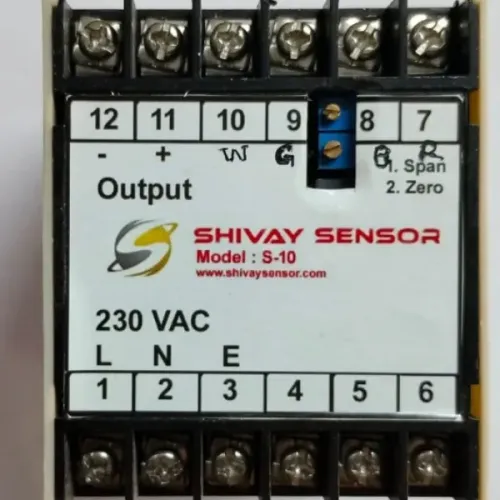
ConsiderationEngineering Best PracticeOff-Axis LoadingButton cells tolerate minimal side load (typically $<5%$). Use a spherical contact radius or hardened loading button to preserve perpendicular force application.Mounting TorqueOver-torquing during installation can induce mechanical zero shifts or yield the strain gauge flexure. Always use calibrated torque drivers per manufacturer spec.Environmental ProtectionLook for welded hermetic seals or IP65/IP67 ratings if operating near washdown stations, hydraulic mists, or cutting fluids.Signal AmplificationMiniature cells typically output $1.0text{ to }2.0text{ mV/V}$. Pair with low-noise signal conditioners or inline digital amplifiers (0–10V, 4–20mA, or USB) to prevent EMI corruption.
Maximizing Measurement Accuracy
High-precision force monitoring in subminiature dimensions requires strict adherence to alignment fundamentals. Ensuring the mating surface is flat, rigid, and perpendicular eliminates bending moments across the internal diaphragm.
Whether designing prototype test equipment or scaling high-volume OEM automated machinery, miniature threaded button load cells provide the balance of structural retention, ultra-low deflection, and dependable accuracy required in demanding modern assemblies.
#LoadCell #Sensors #ForceMeasurement #MechanicalEngineering #PrecisionEngineering #IndustrialAutomation #ButtonLoadCell #MiniatureLoadCell #ThreadedLoadCell #CompressionSensor #StrainGauge #TestAndMeasurement #RoboticsEngineering #MedTech #SurgicalRobotics #AutomatedAssembly #OEMEngineering #AerospaceTesting #LoadCell #PrecisionSensors #MiniatureLoadCell #EngineeringDesign #ForceSensor #Automation #B2BEngineering
Keywords